
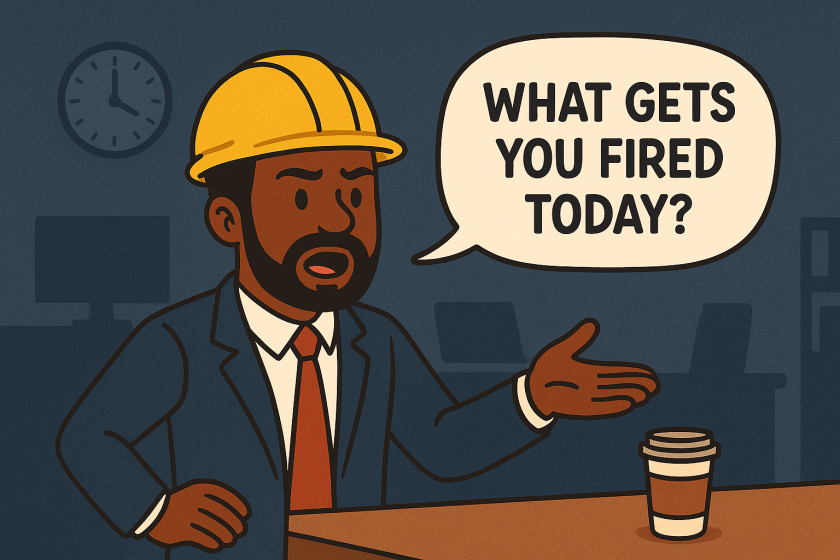
One of the most practical ways to decide what to focus on at work is to ask yourself a simple but uncomfortable question: What gets me fired today if I don’t do it?
Every workplace is full of endless tasks—emails, meetings, updates, reports. Many of them feel urgent, but very few are truly important. If you pause and think carefully, there are usually one or two responsibilities that absolutely define whether you remain valuable to your employer or your business. These are your “make-or-break” tasks, the ones you cannot afford to ignore.
This way of thinking is not new. Brian Tracy, in his classic book Eat That Frog, reminds us to tackle the most important task first—the one that delivers the biggest results. The 80/20 rule, also known as the Pareto Principle, echoes the same wisdom: 80% of the impact comes from just 20% of the effort. In other words, a few vital things matter far more than the trivial many.
Yet there is also a deeper, more philosophical angle—what Charlie Munger called Inversion. He famously said, “Show me where I am going to die, so I don’t go there.” Instead of always chasing success, he encouraged people to think about failure and consciously avoid it. If you understand what could destroy your career, your business, or even your personal life, you can deliberately steer clear of those pitfalls.
Seen this way, asking “what gets me fired?” is just another form of that wisdom. If missing a client deadline could end your contract, then meeting deadlines should sit at the top of your priority list. If failing to manage risks could sink your company, then risk management becomes the “frog” you must eat every single day. Everything else—the small requests, the polite distractions, the “nice-to-do” activities—can wait.
This principle isn’t limited to work. In relationships, for instance, what gets you “fired” is often the loss of trust. No matter how much love or fun you bring, if trust is broken, the relationship collapses. In finances, what gets you “fired” is not the small spending habits here and there—it’s the big mistakes, like reckless debt or neglecting retirement savings.
That’s why this mindset is so powerful. It cuts through the noise and shows you that success is often less about doing everything well and more about doing the one thing that truly matters extremely well. You don’t need to be perfect everywhere, but you cannot afford to fail at the task that holds your job, your reputation, or your peace of mind together.
So tomorrow, when you open your to-do list, pause for a moment. Ask yourself honestly: if I fail to do one thing today, which one would cost me my career, my business, or my peace of mind? Then do that first, and give it your best.
Because sometimes, the surest path to success is simply avoiding the one thing that gets you fired.
 Unlock your true potential