
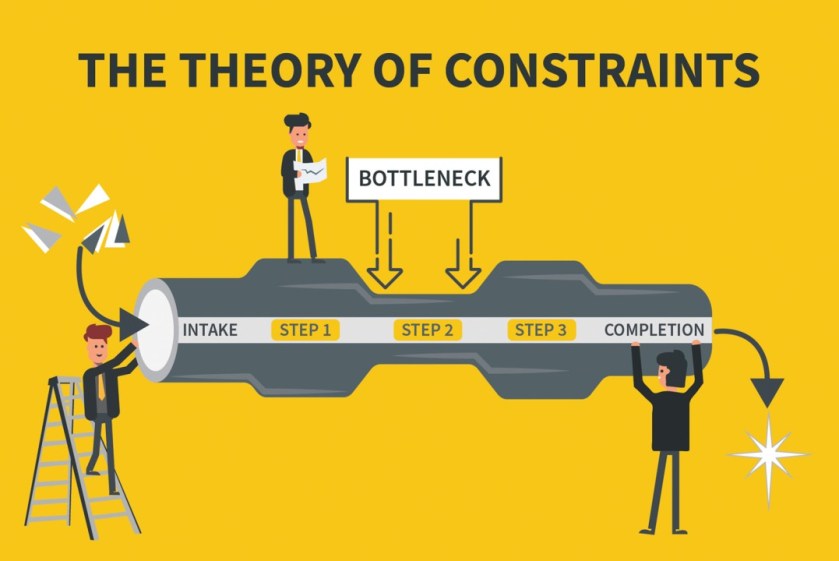
Success is not just about working harder; it’s about systematically removing the obstacles that stand in your way. These obstacles, or limiting factors, are the constraints that keep you from achieving your goals. The faster and more effectively you identify and eliminate them, the closer you get to success.
Let’s break it down with a simple analogy. Imagine you need to travel from point A to point B as quickly as possible. Several factors will affect your speed, including your mode of transport. You could travel by air, road, rail, or water, but your choice will depend on availability, cost, and geography. Even after choosing a mode, new constraints emerge—bad roads, mechanical failures, or flight delays. The key to moving fastest is selecting the option that minimizes these obstacles.
The same principle applies in business. The primary goal of any business is to generate profit, which comes from maximizing revenue and minimizing costs. But between where you are now and where you want to be, limiting factors will slow you down.
Some of the most common limiting factors in business include:
- Market demand – No matter how good your product is, if there’s no demand, your growth is capped.
- Pricing pressure – The market may not allow you to charge as much as you’d like.
- Production inefficiencies – Outdated equipment or poor processes may be slowing output.
- Employee morale – Unmotivated workers produce lower-quality products.
- Distribution challenges – If customers can’t access your product, they can’t buy it.
Some of these constraints are within your control, while others are not. For example, if a competitor releases a superior and cheaper product, you can’t stop them—but you can innovate, improve quality, or explore new markets.
Prioritizing the Removal of Limiting Factors
Since you can’t fix everything at once, you need a strategic approach. A good starting point is tackling internal limitations before external ones. Here’s how:
1. Perfect Your Product – Ensure quality is top-notch. If your product is faulty or inefficient, nothing else matters.
2. Upgrade Your Operations – Invest in the right equipment, streamline processes, and reduce waste.
3. Build a Strong Team – Happy, motivated employees lead to better results. Competitive wages and a good work environment can make all the difference.
4. Solve Distribution Challenges – A great product is useless if people can’t access it. Optimize delivery channels to ensure customers get what they need.
5. Find the Right Market – Before producing anything, identify who will buy it. Market aggressively, create awareness, and get customers to try your product.
The Never-Ending Process of Growth
Even after removing the biggest obstacles, new challenges will always arise. As your business grows, you’ll need more capital, better management systems, and a better strategy. Each problem you solve makes way for another, and this cycle continues until you hit a natural limiting factor—the point where additional investment no longer yields significant returns.
When you reach this stage, it may be time to pivot—exploring new products, markets, or even entirely different business ventures. Success is a continuous process of removing constraints, solving new challenges, and pushing forward.
The key lesson? Progress is about systematically identifying and eliminating limiting factors, one by one. The fewer obstacles in your way, the faster and further you can go.
 Unlock your true potential