
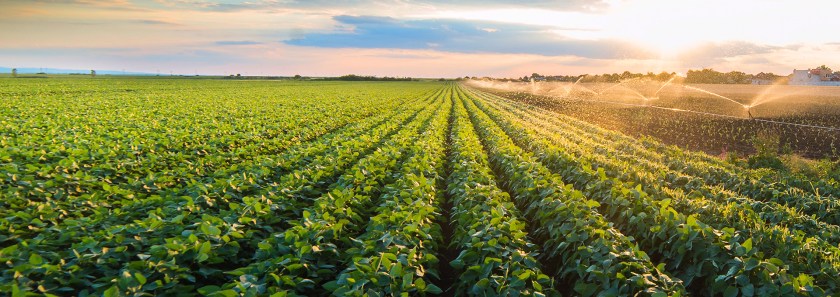
Sometime last year, I decided to venture into soybean farming. I did it in the typical Ugandan corporate style. First, I went to YouTube and watched several “successful” stories of people making millions growing soybeans. I started getting excited about the potential cash I would receive in just three months. Next, I reached out to the local agricultural research center and inquired if they had some improved seeds, as advised by the YouTube gurus. They directed me to someone on Zirobwe Road who was supplying these seeds, and I even bought a book written by a well-known researcher on commercial soybean production.
Being a trained accountant, of course, I had to do a spreadsheet simulation of cash flow projections, crop yield, and whatnot! The projections were based on a “researched” market price of Ushs 3,500 a kilogram. This market price was “confidently” supplied by my farm manager. The projections were complete with profitability and return on investment computations.
So we tilled five acres, bought the “improved” seeds, and planted. We did everything by the book. We used online weather forecasts to determine the best planting time. We planted in straight lines and used a ruler to measure the spacing of the crops. We weeded on time and sprayed as recommended by the YouTube “experts.” Like the typical e-farmer with a full-time job, I hardly visited the garden and coordinated things on WhatsApp and phone, which left a lot of room for “stories” and inflated costs.
Now, things didn’t turn out as projected. For one thing, the yields we were promised were never realized. But the main issue was that our price assumption was totally wrong. At the time of harvest, the market was only willing to pay Ushs 1,500 per kilogram. We tried to keep the soybeans in sacks, but they started to mold. So we cut our losses and sold at such a low price.
I reflected on this experience and realized that I was not alone in this dilemma. Recently, I saw in the news how sugarcane, banana, and tea farmers were cutting down their gardens due to low prices. I decided to investigate this matter further. What I found out was a basic price cycle that appears in different commodity markets, be it oil or grains.
The cycle begins with someone or a few people noticing a need for a commodity. They then invest and reap handsome profits because they are the only ones in the market. This excessive profit attracts other producers into the market and competition increases. Competition increases the supply of the commodity in the market. As supply increases, prices drop because demand is fixed for a given market. At some point, prices are too low, and many producers are generally making losses. The small firms with high production costs that can’t weather the storm cut production and move on to other economic ventures. This leaves a few big firms which then demand a higher price for their limited supply of goods. The cycle then repeats itself. It could be every two or five years, and in some markets, it is a few months.
This cycle applies mainly to commodity undifferentiated goods like agricultural produce, oil, etc. In commodity markets, you typically accept whatever price the market dictates. Typical demand/supply forces dictate the price. You can contrast this with luxury brand goods like the iPhone, where Apple is basically able to charge a premium price irrespective of what the competition is doing.
So, the question becomes what to do about these cycles. If you’re competing in a commodity market, you must be the least-cost producer in the market for you to survive. So, you have to scale to achieve this low-cost position. Competing in the soybean market with two or three acres is not the best use of my resources. I need to be like on fifty acres plus to make reasonable profits. But this scaling requires significant capital, which I don’t have. So, with my limited resources, I should try to provide a differentiated service or product offering in a different market where I can control prices.
The other way to weather the storm is to have a diverse offering of commodity products each with a different price cycle. For example, if you have goats, soybeans, bananas, etc., you then have a better chance to ride out the price declines in any of the commodities.
You should also manage resources carefully and set up a cash buffer. For instance, when you get a bumper harvest from the coffee farm, you can put some of this cash in a unit trust or treasury bonds to protect you from a potential collapse in global coffee prices. The challenge is excited farmers usually blow up their newfound riches after a bumper harvest.
One could also try to find other markets for their produce. One way is to add value to the produce and market it to different customers. For instance, I could have processed soya flour for porridge and sold it to schools. I pondered this option, although I have been down a similar rabbit hole in another commodity and got my fingers burnt. So, I was not willing to risk more money.
The other possible intervention is to produce out of season. Commodity prices follow the natural production cycle. For example, tomato prices go up in the dry season and come down when the rains lead to more production. So, a farmer can decide to use irrigation in the dry season and collect a better price. The farmer, in this case, is willing to produce at a higher cost in the dry season because he will be fully compensated by the higher price. You could also try storage where it is feasible, but this is not generally possible with perishable produce like eggs or bananas.
Of course, anyone in the commodity business should keenly watch the markets to understand the dynamics before deploying additional capital in the business.
In conclusion, prices in commodity markets are driven by supply and demand forces. As a commodity producer, you take whatever price the market gives you. These prices change in predictable cycles across time. We can protect ourselves by studying these cycles, establishing a buffer, adding value to our produce, diversifying our enterprises, scaling to become the lowest cost producer in the market, producing out of season, or simply choosing to play in other markets where you can offer a differentiated product and command better pricing.
 Unlock your true potential