
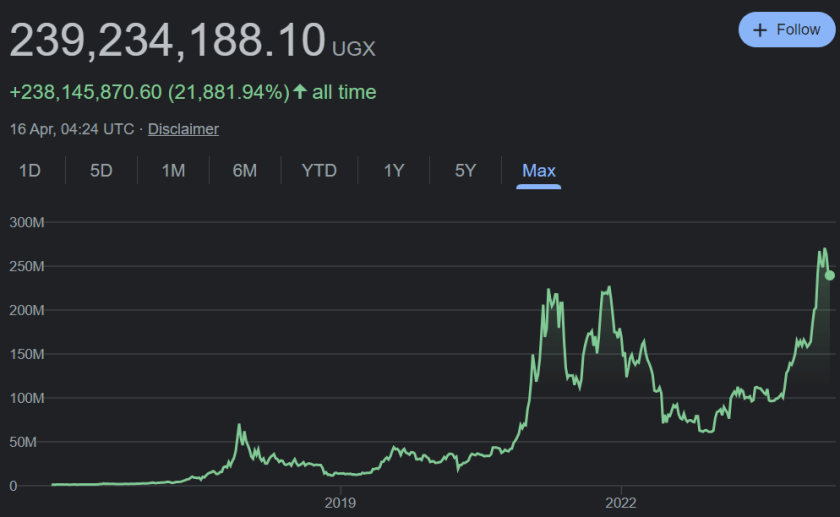
The price of Bitcoin cryptocurrency has recently rallied to about ugx 240m per bitcoin. Bitcoin is like digital money, but it’s a bit different from the usual cash you have in your wallet or bank. It’s a type of currency called cryptocurrency, which means it’s made and managed using computer code. People like using bitcoin because it allows you to send or receive money over the internet without needing a bank or another middleman.
Bitcoin isn’t printed like dollars or shillings. It’s created by computers all over the world solving complex math problems—this process is called mining. Bitcoin isn’t controlled by any government or central bank; instead, it’s managed by a network of computers that follow a set of rules coded into its software. Every bitcoin transaction is recorded in a public ledger called the blockchain. This makes the currency very secure because it’s really hard to cheat or hack. The blockchain is like a long receipt that keeps growing with every transaction, and because everyone can see it, it’s transparent.
People use bitcoin for a lot of reasons—some use it as an investment hoping it will go up in value, others use it to send money across borders cheaply and quickly, and some appreciate its privacy and security features. However, it’s also known for being quite volatile in price, which can make it risky as both an investment and a currency.
Investing in Bitcoin or any other cryptocurrency carries inherent risks, and whether you should invest depends on various factors, including your risk tolerance, investment goals, and financial situation.
Here are some considerations to help you make an informed decision:
1. Risk tolerance: Cryptocurrency markets are highly volatile, with prices capable of experiencing significant fluctuations in a short period. Consider whether you’re comfortable with the potential for rapid and substantial gains or losses associated with investing in Bitcoin.
2. Investment goals: Determine your investment objectives and whether Bitcoin aligns with them. Are you looking for long-term growth, diversification, or speculative opportunities? Consider how Bitcoin fits into your overall investment strategy.
3. Financial situation: Assess your financial situation and whether you can afford to invest in Bitcoin without jeopardizing your financial stability. Avoid investing money you can’t afford to lose, and ensure you have a well-rounded financial plan that includes emergency savings, retirement savings, and other investment vehicles.
4. Diversification: Consider the role of Bitcoin within your investment portfolio. Diversification is key to managing risk, so evaluate whether Bitcoin complements your existing investments and helps spread risk across different asset classes.
5. Research and due diligence: Take the time to research and understand Bitcoin and the cryptocurrency market. Learn about its technology, use cases, adoption trends, regulatory environment, and potential risks. Consider seeking advice from financial professionals or experts in the field.
6. Time horizon: Consider your investment time horizon and whether you’re prepared to hold Bitcoin for the long term or if you’re looking for short-term trading opportunities. Keep in mind that cryptocurrency markets can be highly speculative, and short-term price movements can be unpredictable.
7. Regulatory and security risks: Be aware of regulatory risks associated with investing in Bitcoin, as regulations can impact its value and legality in different jurisdictions. Additionally, consider the security risks of holding and transacting with cryptocurrencies, such as hacking, fraud, and theft.
Ultimately, investing in Bitcoin involves weighing the potential rewards against the risks and considering how it fits into your overall investment strategy and financial goals. It’s essential to approach cryptocurrency investing with caution, diligence, and a long-term perspective. If you’re unsure or uncomfortable with the risks involved, it may be prudent to seek guidance from a financial advisor before making any investment decisions.
 Unlock your true potential